Medicine · from semester 1 to clinical rotations

You study the whole course. The map records what stuck.

Practilium shows what you already master, topic by topic, from semester 1 to clinical rotations, and builds what to study today.

No credit card required to get started

Sample data.
Musculoskeletal

Are any of these you?

then at quiz time I cannot recall

Blank.

At question time. Reading feels like studying, but it does not prove it stuck.

In PractiliumWritten assessmentYou explain in your own words. The topic only changes state if it stuck.

is extremely tedious to learn

51.9%

of the students analysed in a study failed Human Anatomy.1

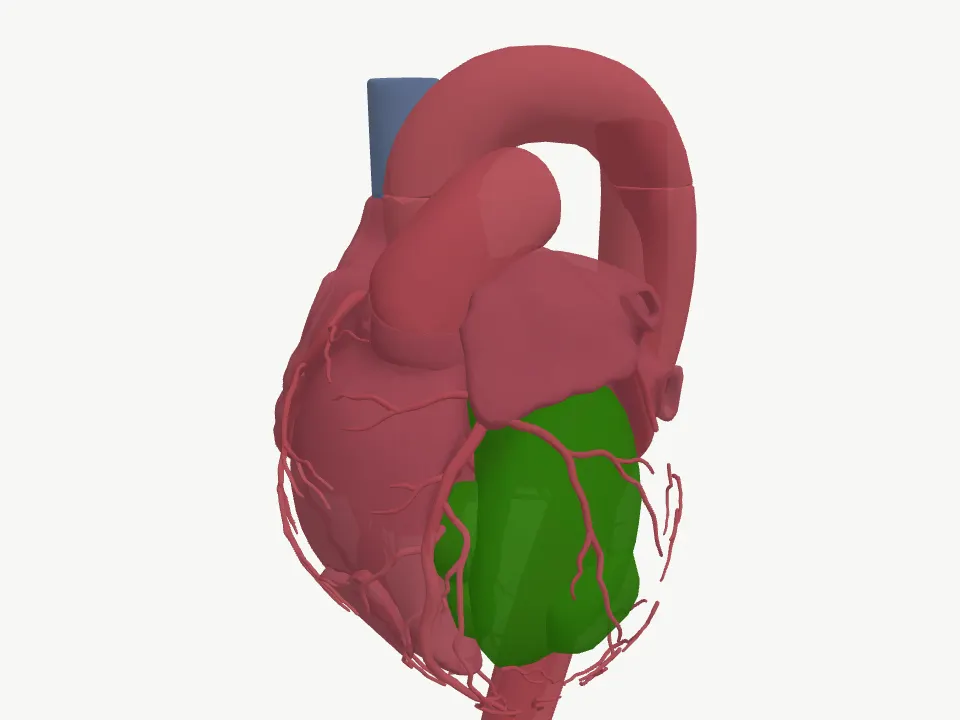
In Practilium3D AtlasRotate, tap and read the card of each piece before you reach the lab bench.

but the knowledge isn't tied to anything so I forget

5·3·6·3·5

roots, trunks, divisions, cords and branches of the brachial plexus. Without a patient, it is a list.

In PractiliumLightning casesEvery structure tied to a patient. The name gets a reason.

but after a few weeks or months I've forgotten

78% to 40%

was the drop in students' CPR quality in six months, without review.2

In PractiliumMemoryCards come back at the right time. What you got wrong always comes back sooner.

then spend hours planning my studies instead of studying

30 to 40 h

of class per week. One hour is left at night.

In PractiliumToday's queueThree things for the hour that is left, already chosen by your plan.

and there is no way to see what is still missing

Five states

per topic: not started, few observations, weak, in progress and confident.

In PractiliumMastery mapThe map lists what is missing. The state changes when you are assessed.

Studying prepares. Assessing measures.

Every topic has a state. It only changes when you answer in your own words, solve a case or take a mock exam. Reading turns nothing green.

  1. 1Study. The AI Tutor and the Atlas prepare the topic
  2. 2Assess. Answer in your own words or solve a case
  3. 3See the map. The topic's state changes with the assessment
  4. 4Follow the plan. Today's queue brings what does not hold up yet
  • 2Confident
  • 2In progress
  • 1Weak
  • Heart: chambers, valves and the path of bloodConfident
  • Lungs and airwaysWeak
  • Brachial plexusIn progress
  • Spine and the herniated discIn progress
  • Urinary system: from kidneys to urethraConfident
  • Basal nucleiNot started
Filter:
Sample data.

Where are you in the course?

Each stage asks for something different. See what usually weighs most in each one.

Semester · Basic

  • Anatomy I
  • Histology
  • Biochemistry

What usually weighs

“The volume of names and the first practical exam, which usually lands between week 6 and 8.”

Your plan this semester

013D AtlasRotate the structure, tap and read the card: the name, a summary and what not to confuse with what.
02MemoryCards that return on the right date. What you got wrong always comes back sooner.
03AI TutorThe week's topic in five phases, from introduction to summary, with no hunting for where to start.

From the first class on a topic to evidence you can use on the exam.

  1. Semester 1

    First exposure

    1. Open the 3D Atlas, rotate the structure, tap it and read the card.
    2. Take the AI Tutor through its five phases, from the introduction to the summary.
    3. Answer the written assessment in your own words. The topic on the map moves only after that assessment.
  2. Semesters 2 to 4

    The week's queue

    1. Put your school's exam dates on the growth plan.
    2. The plan gives you a queue of three things for the time you have.
    3. A topic marked confident stays out of that queue, so you do not restudy what already holds.
  3. Years 3 and 4

    The clinic, before the ward

    1. Work a clinical case where the patient changes with the decision you make.
    2. Read a blood count, a blood gas, an ECG or an X-ray in Diagnostics before the case asks for it.
    3. The same map now holds the clinical topics, and it still moves only when you are assessed.
  4. Exam ready

    The ENAMED format

    1. Sit a timed mock in the ENAMED format: 100 questions, 4 options. The attempt is recorded.
    2. The map still shows the topics that do not hold.
    3. The growth plan queues those topics, not the whole course.

Practilium and traditional prep courses by format.

Format comparison of Practilium and traditional prep courses
CapabilityTraditional prep coursesPractilium
Interactive clinical cases, a 3D atlas, and morePartlyYes
A mastery state per topic, which only moves when you are assessedNoYes
A clinical case where the patient changes with your decisionPartlyYes

Practilium does not replace the book or the class. The table compares formats, not named products.

Traditional prep courses, as a category, combine video lessons with commented question banks, flashcards and mock exams, and several now have an AI assistant. Some offer interactive clinical cases or simulated stations. An interactive anatomy atlas is not usually part of the offer. The Practilium column describes what the product does today: cases where the patient changes with your decision, a 3D Atlas, an AI tutor and mock exams, with a mastery state that only moves on assessment.

The typical first-year list. The book stays on the shelf.

The prices beside this are average bookstore prices for Portuguese-language editions, approximate. The list changes from school to school.

Practilium does not replace the book. The map shows which topic has not changed state yet.

Start now
The typical first-year list
Atlas of human anatomyR$ 520
Clinically oriented anatomyR$ 480
Textbook of medical physiologyR$ 560
Basic histologyR$ 330
BiochemistryR$ 450
Clinical embryologyR$ 360
NeuroanatomyR$ 300
Pocket cards and atlasR$ 260
Total in booksR$ 3,260
Practilium FreeFree
Average bookstore prices for Portuguese-language editions, approximate (Oct/2026). The list changes from school to school.

Free to start today. Pro for the whole catalogue.

Free

To start today
Free
  • A curated sample of each feature and a monthly credit balance
  • Tracks and simulated X-ray and CT on the Free account, after you sign in.
  • Free credits are added after you sign in.
  • What you started stays available when the balance ends
  • No credit card required to get started
Start now

Pro

Pricing for your region is coming soon

Study the whole semester with the full catalogue open.

  • Opens the whole catalogue: cases, mock exams, assessments and Atlas
  • Monthly or annual; cancel whenever you want
  • 7 days to back out, with a full refund
See the Pro plan

Study aid for medical students. No Practilium score certifies competence (CFM Resolution 2,454/2026). One account, one device.

Questions from people in the course

Does it work for my school?

The content follows the medical course. You enter your exam date and your school's exams. The order of subjects at your school may differ, so you study by topic.

Does it replace the book and the class?

No. Practilium does not teach in place of class or the book. It shows what you already master, topic by topic, and what does not hold up yet.

Does it work in the clinical years and clinical rotations?

Yes. From semester 5 on, the weight moves to clinical cases, lab reading and the plan. Mock exams in the ENAMED format are for when the exam is on the horizon.

When does a topic's state change?

Only when you assess: answer in your own words, solve a case or take a mock exam. Studying alone turns nothing green.

Can the AI be wrong?

Yes. The cards and the grading are generated by AI, and no health professional writes or reviews them. Every card has a way to report what is wrong. No Practilium score certifies competence.

The map shows the state of each topic. The queue says what to study.

Create the account and open the Tutor, the Atlas, a case or an assessment. A topic's state changes when you are assessed.

Start now

No credit card required to get started

Sources

  1. Revista Brasileira de Educação Médica 39(4), 2015: “What factors influence the pass rate in Human Anatomy?” (129 students).
  2. Arquivos Brasileiros de Cardiologia 117(5), 2021: retention of CPR skills in medical students.
  3. Book prices: bookstore averages for Portuguese-language editions, approximate (Oct/2026).